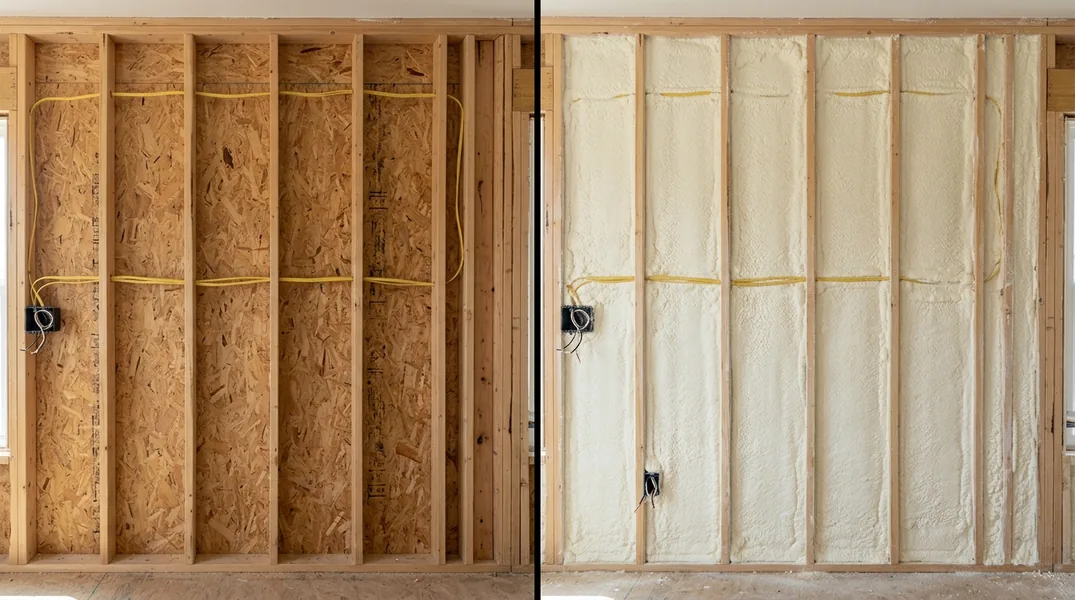
Understanding Spray Foam Attic Insulation Basics
When it comes to insulating your home in Topeka, Attic Spray Foam Insulation has become one of the most effective solutions available to homeowners. Unlike traditional fiberglass or cellulose insulation, spray foam expands to fill every crack, crevice, and gap in your attic space, creating an air seal that significantly reduces energy loss. This superior sealing capability makes spray foam particularly valuable in Kansas homes, where temperature swings between summer heat and winter cold can strain your HVAC system and inflate utility bills.
Spray foam insulation comes in two primary varieties: open cell and closed cell formulations. While both types share the fundamental benefit of air sealing and thermal resistance, they differ considerably in density, moisture permeability, cost, and performance characteristics. Understanding these differences is essential for making an informed decision that aligns with your home's specific needs, your budget, and the unique climate challenges of the Topeka area. Each type offers distinct advantages and trade-offs that we will explore in detail throughout this guide.
What Is Open Cell Spray Foam Insulation?
Open Cell Spray Foam Insulation is a lighter, more flexible foam product that contains cells with walls that are not completely closed. This structure allows air and moisture to pass through the foam, which is why open cell is often described as semi-permeable. The foam expands significantly during application, filling spaces thoroughly and creating an excellent air seal despite its lower density compared to closed cell alternatives. Open cell foam typically has an R-value of approximately 3.5 to 3.6 per inch, meaning you need more thickness to achieve the same thermal resistance as denser foam types.
One of the primary advantages of open cell foam is its cost effectiveness. Because it uses less material and expands more generously, open cell spray foam tends to be more affordable than closed cell options, making it an attractive choice for budget-conscious homeowners in Topeka who still want superior insulation performance. Additionally, open cell foam is sound-dampening, which can help reduce noise transmission between rooms and from outside. The flexibility of open cell also means it adapts well to wood framing that naturally shifts and settles over time, reducing the risk of gaps forming as your home ages. However, because it is permeable to moisture, open cell foam should not be used in applications where water exposure is a concern, and it requires an interior vapor barrier for proper moisture management.
What Is Closed Cell Spray Foam Insulation?
Closed Cell Spray Foam Insulation is a denser, more rigid foam where the cell walls are completely sealed, trapping air inside each cell. This closed structure makes the foam impermeable to both air and moisture, providing superior moisture resistance and a higher R-value of approximately 6.0 to 6.5 per inch. Because closed cell foam is denser and more rigid, it also provides structural reinforcement to walls and attic framing, which can be particularly beneficial in areas prone to high winds or seismic activity. The superior moisture barrier properties make closed cell the ideal choice for sealed attic applications, especially in climates with significant humidity variations.
The primary trade-off with closed cell foam is cost. The material itself is more expensive, and because it doesn't expand as dramatically as open cell, you typically need professional installation expertise to achieve optimal results. However, the long-term benefits often justify the initial investment for homeowners seeking maximum energy efficiency and durability. Closed cell foam also provides better resistance to air and moisture infiltration, making it the preferred choice for unvented attic spray foam applications where you want to create a truly conditioned attic space that functions as part of your home's thermal envelope. This makes closed cell particularly valuable in Kansas homes where seasonal temperature extremes can stress building envelopes.
Sealed Attic Insulation: Why Air Sealing Matters in Topeka
Creating a properly sealed attic is one of the most cost-effective energy improvements you can make to your home. Traditional insulation like fiberglass batts and blown cellulose provide thermal resistance but fail to seal air leaks, which can account for 20 to 30 percent of your home's heating and cooling losses. Unvented attic spray foam addresses this problem directly by creating an air-tight barrier that prevents conditioned air from escaping and unconditioned outdoor air from infiltrating your living spaces. In Topeka, where winters can be brutally cold and summers intensely hot, this air sealing capability translates directly to lower utility bills and improved comfort year-round.
When you choose Attic Spray Foam Insulation, you are not just adding insulation; you are fundamentally transforming how your home manages thermal energy. The foam seals around rafters, joists, electrical wiring, plumbing penetrations, and ductwork that traditional insulation cannot address. This comprehensive air sealing also improves indoor air quality by reducing uncontrolled air infiltration that can bring in dust, allergens, and outdoor pollutants. For homeowners in Topeka concerned about energy costs and comfort, the investment in proper attic insulation with spray foam consistently delivers measurable returns.
Attic Spray Foam Insulation Cost in Topeka: What to Budget
Understanding the financial investment required for spray foam attic insulation is an important part of the decision-making process. Open cell spray foam typically costs between 50 cents and 1 dollar per board foot, while closed cell spray foam generally ranges from 1 dollar to 1.50 dollars per board foot or more, depending on thickness and local market factors. For a typical attic space of 1,000 to 1,500 square feet, you can expect open cell installation to cost between 1,500 and 3,000 dollars, while closed cell projects typically range from 3,000 to 6,000 dollars or higher. These estimates depend on attic accessibility, existing insulation removal requirements, and the specific R-value you want to achieve.
While closed cell spray foam carries a higher upfront cost, many homeowners find the investment justified by superior long-term performance, moisture protection, and energy savings. The actual pricing for your specific project depends on numerous factors unique to your home. To understand what your attic insulation project will cost, we recommend contacting Topeka Spray Foam Insulation at (785) 329-9236 for a detailed assessment. Our team can evaluate your attic space, discuss your energy efficiency goals and budget constraints, and provide a transparent quote that helps you make the best decision for your home and financial situation.
Choosing Between Open Cell and Closed Cell: Which Is Right for Your Home?
Selecting between open cell and closed cell spray foam depends on several factors specific to your home and situation. If your primary goal is maximizing energy efficiency and you have moisture concerns in your attic, closed cell foam is typically the superior choice despite its higher cost. Closed cell is particularly recommended for unvented attic spray foam applications, where the foam creates the primary air barrier and moisture control layer for your attic space. If your attic experiences humidity issues or you live in an area with significant rainfall, the moisture resistance of closed cell becomes increasingly valuable.
Open cell spray foam makes sense if you are working with a tighter budget and your attic has good ventilation and low moisture risk. It provides excellent air sealing and thermal performance at a more accessible price point, making it an excellent choice for many homeowners. Open cell also offers superior sound dampening properties if noise reduction is a concern. The key is ensuring that whichever product you choose is installed properly by experienced professionals who understand local building codes and best practices. If you are unsure which option suits your home best, the team at Topeka Spray Foam Insulation can help you evaluate your specific situation. Contact us today at (785) 329-9236 or request a free estimate to discuss your attic insulation needs with an expert who understands Topeka's climate and building characteristics.
Looking for a professional spray foam insulation contractor in Topeka? Topeka Spray Foam Insulation responds fast for all your spray foam insulation needs.
Get a Free Quote