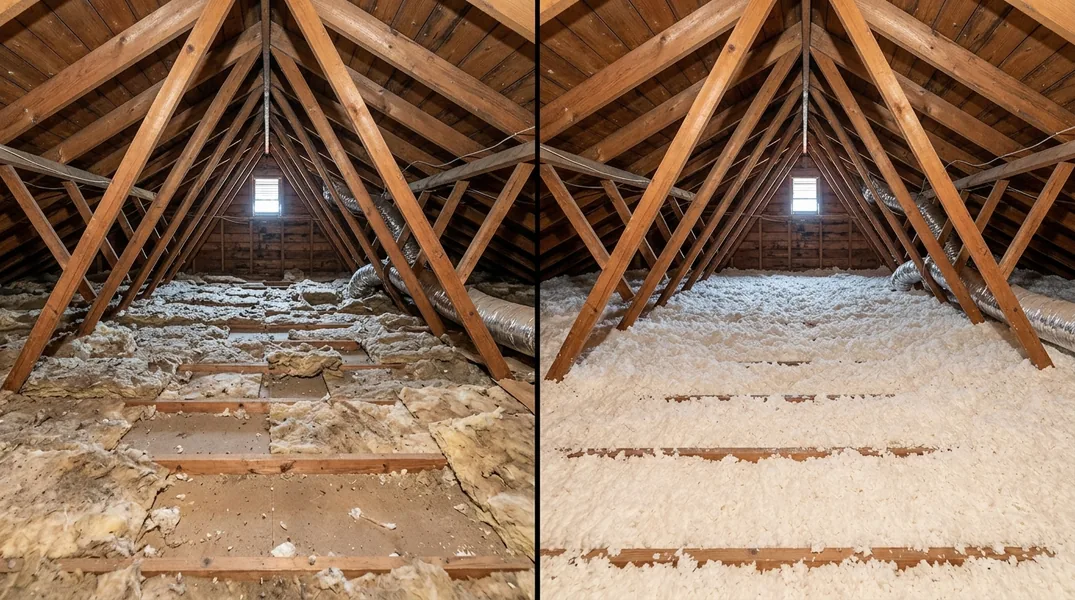
Why Mid-Century Ranch Homes in Topeka Need Better Attic Insulation
Mid-century ranch homes are iconic in Topeka. Built between the 1940s and 1970s, these charming single-story houses feature clean lines, open floor plans, and a timeless appeal that many homeowners love. However, what made these homes affordable and quick to build back then has become a significant challenge today: their attic insulation is often inadequate by modern standards.
When these homes were originally constructed, building codes were far less stringent than they are now. Insulation materials were thinner, installation methods were less precise, and energy efficiency simply wasn't the priority it is today. Over the past 50 to 80 years, whatever insulation was installed has likely settled, compressed, or deteriorated. This means your attic is losing conditioned air year-round, driving up your heating and cooling costs while making your home less comfortable. The gaps between joists, around penetrations, and along the eaves are where most of the energy loss occurs, and traditional insulation methods struggle to seal these problem areas effectively.
Spray Foam vs Blown In Insulation: Which Is Right for Your Attic
When homeowners in Topeka begin researching attic insulation upgrades, they quickly encounter the comparison between spray foam and blown-in insulation. Both have their place in the market, but they work very differently and deliver different results, especially in older homes with irregular framing and existing gaps.
Blown-in insulation, typically made from cellulose, fiberglass, or mineral wool, is installed by blowing loose material into the attic cavity. It's relatively affordable upfront and can be applied quickly over existing insulation. However, blown-in insulation has a critical weakness: it doesn't seal air leaks. It simply fills space with material, but if there are gaps, cracks, or irregular framing (common in mid-century homes), air will flow around the insulation. Additionally, blown-in materials can settle over time, reducing their R-value and effectiveness. In contrast, Attic Spray Foam Insulation expands to fill every cavity, crack, and crevice. It creates an air seal while simultaneously providing insulation, addressing both problems at once. This dual benefit makes spray foam particularly effective for older homes where air leakage is a major energy loss culprit.
Spray Foam vs Fiberglass: Why Fiberglass Falls Short in Older Attics
Fiberglass batts and rolls have been the standard attic insulation for decades, and you likely have some in your mid-century ranch home already. Fiberglass is inexpensive, easy to install, and has been proven safe when handled properly. For new construction with tight framing and minimal air leakage, fiberglass can be adequate. However, for older homes, fiberglass has several significant limitations.
Fiberglass works by trapping dead air within its fibers. It only insulates the space it occupies, and it does nothing to stop air movement. In a mid-century home with settling, gaps between framing members, and penetrations for electrical wiring and plumbing, air flows freely around fiberglass batts. Additionally, fiberglass can absorb moisture, which reduces its insulating value and can lead to mold growth in humid climates. Spray foam, by contrast, creates a continuous thermal and air barrier. It adheres to framing, fills irregular spaces, and resists moisture intrusion. For the Topeka climate with its temperature swings and occasional humidity, spray foam's superior air-sealing and moisture resistance make it the best insulation for attic spaces in older homes.
Spray Foam vs Cellulose: Understanding the Performance Difference
Cellulose insulation is made from recycled paper and is often promoted as an eco-friendly alternative to fiberglass or spray foam. It has a higher R-value per inch than fiberglass, which appeals to homeowners looking for efficiency. However, like fiberglass, cellulose is a fill-type insulation that does not create an air seal. It settles significantly over time, sometimes losing 20 percent or more of its initial R-value within the first year. It's also hygroscopic, meaning it readily absorbs moisture, which is a real concern in attic spaces where temperature fluctuations can cause condensation.
When comparing spray foam vs cellulose, the key difference is that spray foam doesn't settle, doesn't absorb moisture, and seals air leaks simultaneously. Open Cell Spray Foam Insulation offers a good balance of R-value and cost, while Closed Cell Spray Foam Insulation provides superior air sealing and moisture resistance, making it ideal for attics in older homes. The upfront cost of spray foam is higher than cellulose, but the long-term performance, durability, and energy savings justify the investment for homeowners serious about improving their home's efficiency.
Attic Spray Foam Insulation Cost in Topeka: What to Budget
Budget is always a consideration when planning a home improvement project. Spray foam insulation typically costs more per square foot than blown-in insulation or fiberglass, ranging anywhere from $1.50 to $3.50 per board foot depending on the type, thickness, and complexity of your attic. For a typical mid-century ranch attic, homeowners can expect to invest several thousand dollars for a complete upgrade. However, this cost should be viewed as an investment in long-term energy savings, not just an expense.
The energy savings from upgrading to spray foam insulation often pay for itself within five to ten years through reduced heating and cooling costs. Many homeowners also see an immediate improvement in comfort, with fewer cold spots in winter and better temperature control in summer. Additionally, improved attic insulation can increase your home's resale value and may qualify you for energy efficiency tax credits or rebates. To understand the specific pricing for your home, contact Topeka Spray Foam Insulation at (785) 329-9236 for a detailed assessment and free estimate tailored to your attic's unique needs.
How to Get Started with Spray Foam Insulation for Your Topeka Home
If you own a mid-century ranch home in Topeka and are ready to improve your attic insulation, the first step is a professional evaluation. A qualified spray foam contractor will inspect your attic, identify air leaks, assess existing insulation, and recommend the best solution for your specific situation. This might include Attic Spray Foam Insulation, or it might include a combination approach using spray foam for air sealing and additional insulation for coverage.
Topeka Spray Foam Insulation has the experience and expertise to help homeowners in the area make the right choice for their homes. Whether you're dealing with an uncomfortable attic, rising energy bills, or simply want to upgrade an aging home, spray foam insulation is a proven solution for mid-century ranch homes. Reach out today at (785) 329-9236 or visit our website to schedule your free estimate. Let's close those gaps and make your home more comfortable and efficient.
Looking for a professional spray foam insulation contractor in Topeka? Topeka Spray Foam Insulation responds fast for all your spray foam insulation needs.
Get a Free Quote