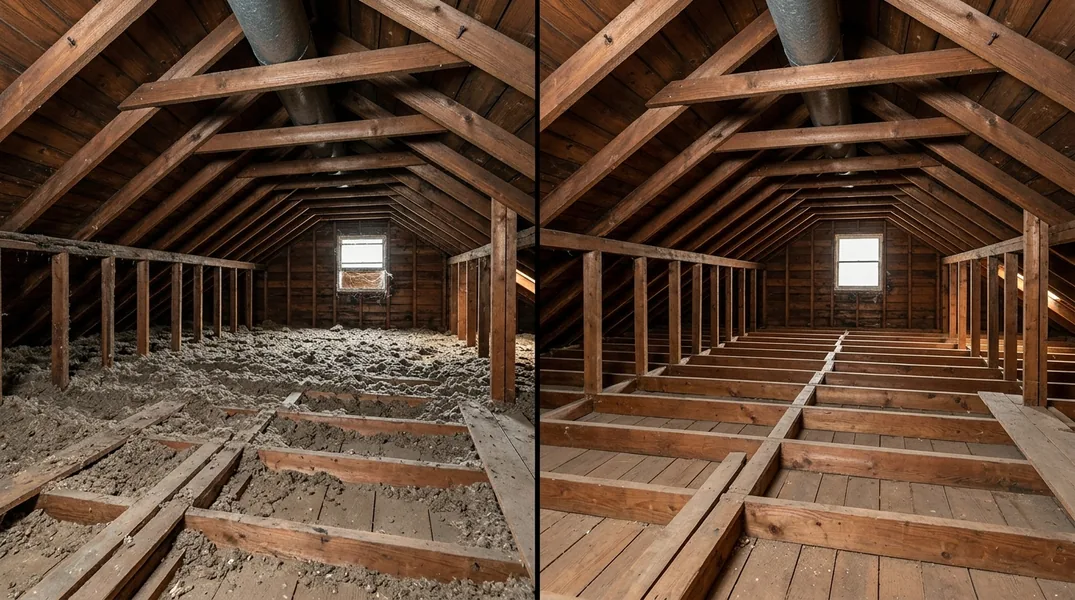
Why Century-Old Homes in Topeka Need Better Insulation
Homes built in Topeka during the early 1900s have charm, character, and solid bones, but they rarely have adequate insulation by today's standards. Many of these historic properties were constructed with minimal or no attic insulation, relying instead on natural air gaps and whatever materials were available at the time. As seasons change and energy costs rise, homeowners discover that their beautiful older homes leak heat in winter and cool air in summer, driving utility bills sky-high.
The problem worsens in basements, where moisture seeps through foundation walls and creates damp conditions that encourage mold growth and structural damage. Traditional insulation materials like fiberglass batts and cellulose settle over decades, losing their R-value and leaving gaps where air can escape. For homeowners in Topeka looking to preserve their home's integrity while improving comfort and efficiency, Attic Spray Foam Insulation offers a modern solution that addresses the unique challenges of older construction.
Is Spray Foam Insulation Worth It for Older Attics
The question of whether spray foam insulation is worth it depends on your priorities and budget. For homeowners with century-old attics, the answer is almost always yes. Spray foam creates an air-tight seal that traditional insulation simply cannot match. When applied correctly, it expands to fill every crack, crevice, and irregular space in your attic, eliminating thermal bridging and preventing conditioned air from escaping. This translates directly into lower heating and cooling costs, often saving homeowners 15 to 30 percent on energy bills within the first year.
Beyond energy savings, spray foam insulation protects your home's structural integrity. By sealing air leaks, it reduces moisture infiltration that can rot wooden framing and support beams. It also acts as a pest barrier, making it harder for rodents and insects to enter your attic. For older homes where attic access is difficult and insulation has deteriorated significantly, spray foam eliminates the need for frequent re-insulation. While the upfront investment is higher than fiberglass, the long-term return on investment, combined with improved comfort and home protection, makes it a worthwhile upgrade for most Topeka homeowners.
Is Spray Foam Insulation Safe? Understanding Off-Gassing and Health Concerns
Safety is a legitimate concern when considering spray foam insulation. The most common worry involves spray foam off-gassing, which occurs when volatile organic compounds (VOCs) are released during and shortly after installation. Quality spray foam products used by professional installers are formulated to minimize VOC emissions, and most off-gassing occurs within the first 24 to 48 hours after application. Proper ventilation during and immediately after installation significantly reduces any risk. Once fully cured, spray foam is inert and poses no ongoing health risk to occupants.
The key to safe spray foam installation is hiring experienced professionals who follow industry best practices. At Topeka Spray Foam Insulation, we use high-quality, EPA-approved foam products and ensure proper ventilation during installation. We recommend that homeowners remain away from the attic for 24 hours after application and keep windows open for cross-ventilation. If you have respiratory sensitivities or asthma, inform your installer beforehand. Open Cell Spray Foam Insulation typically has lower VOC content than closed-cell varieties, making it a safer choice for some homeowners, though it offers a lower R-value. When installed by qualified professionals and given adequate time to cure, spray foam is a safe, effective insulation solution.
Common Spray Foam Insulation Problems and How to Avoid Them
While spray foam insulation is effective, improper installation can create problems that cost thousands to fix. One of the most common spray foam insulation problems is over-application, where foam is applied too thickly or in areas where it shouldn't be, trapping moisture and creating conditions for mold growth. Another issue occurs when foam is applied over wet surfaces or during humid conditions, preventing proper curing and leading to weak spots. Poor quality control or the use of inferior products can result in foam that shrinks, cracks, or fails to provide adequate insulation.
Inadequate ventilation is another frequent problem in older attics. If spray foam completely seals an attic without proper soffit and ridge vents, it can create moisture buildup that damages roofing materials and wooden structures. The solution is working with experienced installers who understand building science and local building codes. At Topeka Spray Foam Insulation, we conduct thorough pre-installation inspections to identify moisture issues, ensure proper ventilation, and apply foam only where it's appropriate. We also verify that your attic has adequate moisture management before and after installation, protecting your investment and your home's long-term health.
Spray Foam Insulation Pros and Cons: A Balanced Look
Understanding the full picture of spray foam insulation pros and cons helps you make an informed decision. On the positive side, spray foam offers superior air sealing, high R-value per inch (especially closed-cell varieties), excellent moisture resistance, and long-term durability. It's ideal for irregularly shaped spaces common in older homes, and it provides pest and air infiltration protection that other insulation types cannot match. For homeowners concerned about energy efficiency and home preservation, these advantages are substantial.
The cons include higher upfront costs compared to fiberglass or cellulose, the need for professional installation, potential off-gassing concerns during and shortly after installation, and the difficulty of removing or modifying foam once it's cured. Some homeowners also worry about environmental impact, though modern spray foam products are increasingly eco-friendly. Closed Cell Spray Foam Insulation is more expensive but offers better moisture resistance and higher R-value, while open-cell foam is more affordable and breathable but less resistant to moisture. For century-old Topeka homes where air sealing and moisture control are critical, the pros typically outweigh the cons, but it's worth discussing your specific situation with a professional.
Attic Spray Foam Insulation Cost in Topeka: What to Budget
Budget is often the deciding factor for homeowners considering spray foam. Spray foam insulation costs more upfront than traditional options, typically ranging from $1.50 to $3.50 per board foot for closed-cell foam and $0.44 to $0.65 per board foot for open-cell foam. For a typical 1,200-square-foot attic, you might expect to invest $3,000 to $8,000 or more, depending on attic size, foam type, and local labor rates. While this seems steep compared to fiberglass (which might cost $1,500 to $3,000), the energy savings and durability make spray foam more cost-effective over time.
To get an accurate picture of spray foam insulation costs for your specific home, request a free estimate from Topeka Spray Foam Insulation. We'll assess your attic, discuss your insulation goals, and provide transparent pricing based on the scope of work. Many homeowners also qualify for energy efficiency tax credits and rebates that offset the initial investment. When you factor in lower energy bills, improved comfort, extended roof life, and protection against pest and moisture damage, spray foam insulation becomes a smart long-term investment for older Topeka homes. Call us at (785) 329-9236 to discuss your project and learn how spray foam can transform your home's energy performance.
Looking for a professional spray foam insulation contractor in Topeka? Topeka Spray Foam Insulation responds fast for all your spray foam insulation needs.
Get a Free Quote