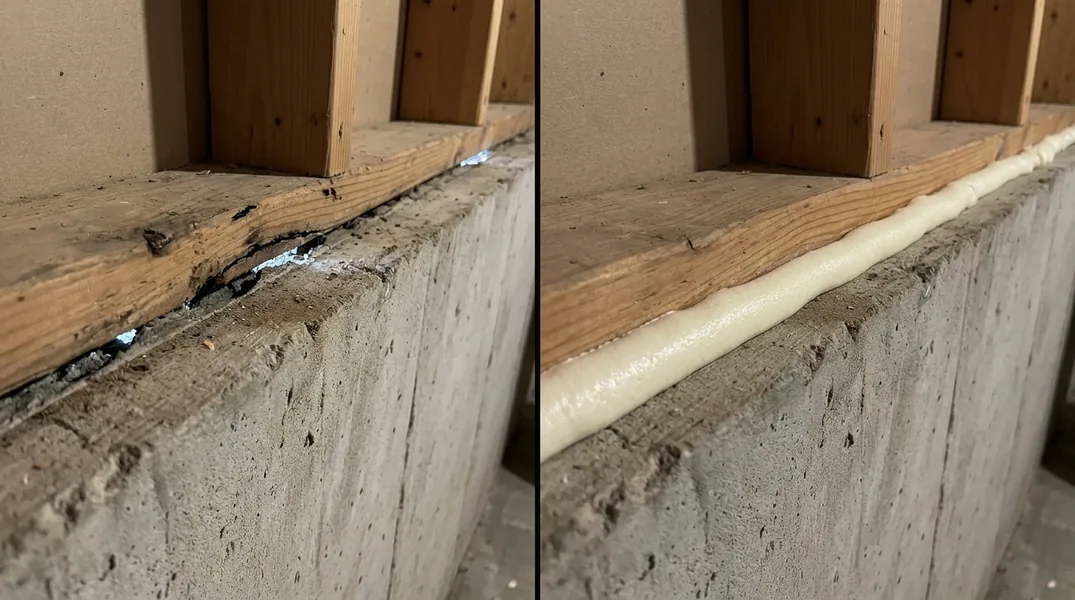
Understanding Air Sealing vs. Full Spray Foam Insulation
When homeowners in Topeka think about improving their attic's thermal performance, they often face a critical decision: should they invest in air sealing alone, or upgrade to full Attic Spray Foam Insulation? These are two distinct approaches to energy efficiency, and the right choice depends on your home's current condition, your budget, and your long-term goals.
Air sealing focuses on closing gaps, cracks, and penetrations where conditioned air escapes. This might include sealing around electrical outlets, ductwork, pipes, and the attic hatch. It's a targeted approach that addresses one of the biggest culprits of energy loss in homes. Full spray foam insulation, by contrast, provides both air sealing and high-performance insulation in a single application, creating a continuous thermal barrier throughout your attic space. Understanding the strengths and limitations of each method will help you make an informed decision for your specific situation.
Spray Foam Insulation R-Value Per Inch and Performance Standards
One of the most important metrics when evaluating insulation is the R-value, which measures thermal resistance. Spray foam insulation R-value per inch varies depending on the type you choose. Closed Cell Spray Foam Insulation typically delivers 6.0 to 7.0 R-value per inch, making it the highest-performing option available. Open Cell Spray Foam Insulation, meanwhile, offers approximately 3.6 to 3.8 R-value per inch. Both outperform traditional fiberglass batts, which provide only 3.2 to 3.8 R-value per inch.
The difference becomes significant when you consider how thick spray foam needs to be to meet your home's insulation requirements. In Kansas, the R-value requirements by state for attic insulation typically recommend R-38 to R-49 depending on your specific climate zone and heating/cooling needs. This means you'd need approximately 6 to 8 inches of closed cell foam or 10 to 14 inches of open cell foam to meet these standards. Air sealing alone won't achieve these R-values, so if your attic currently lacks adequate insulation, you'll likely need to add material on top of your air sealing work, making the combined approach less cost-effective than a comprehensive spray foam solution.
How Thick Should Spray Foam Be in Your Attic?
Determining how thick should spray foam be requires understanding both your current insulation levels and your energy goals. Most homes benefit from achieving at least R-38 in the attic, though R-49 or higher provides superior performance, especially in Kansas's variable climate. If your attic currently has little to no insulation, you may need the full recommended thickness. However, if you already have some fiberglass or cellulose insulation in place, spray foam can be applied over it to boost your overall R-value.
The thickness decision also affects your budget and the type of foam you choose. Closed cell foam, being more expensive per inch but delivering higher R-values, allows you to achieve your target performance with less material. Open cell foam requires more depth but costs less overall. A professional energy assessment from Topeka Spray Foam Insulation can determine your optimal thickness by evaluating your current insulation, air leakage patterns, and energy usage. Call us at (785) 329-9236 to schedule an evaluation and understand exactly what your attic needs.
When Air Sealing Alone Makes Sense
Air sealing is an excellent first step and may be sufficient if your attic already has adequate insulation in place. If you've had a recent energy audit and discovered that your primary energy loss is from air leakage rather than insufficient R-value, focusing on sealing air gaps can deliver immediate, noticeable improvements in comfort and utility bills. Attics with existing insulation at or near recommended levels often benefit most from air sealing, since adding insulation on top of poor air sealing is like putting a blanket over a leaky window.
Air sealing is also the more affordable option upfront. For homeowners in Topeka on a tight budget, addressing the most obvious air leaks can provide meaningful energy savings without the higher investment required for spray foam. However, air sealing has limitations. It doesn't improve R-value, so if your attic insulation is below recommended levels, you'll eventually need to add more material. Additionally, air sealing requires careful attention to detail, and missed gaps can undermine the entire project's effectiveness.
The Case for Full Spray Foam: Long-Term Value and Durability
Full spray foam insulation addresses both air sealing and insulation performance simultaneously, making it a comprehensive solution that often delivers better long-term value. Once applied, spray foam creates a seamless, continuous thermal envelope that doesn't settle, compress, or develop gaps over time like traditional insulation can. This durability means your R-value remains consistent for decades, protecting your investment and maintaining energy efficiency year after year.
Spray foam also provides secondary benefits that air sealing alone cannot match. It acts as a moisture barrier, helping prevent mold growth and protecting your roof structure. It can reduce pest infiltration, since rodents and insects cannot easily penetrate cured foam. For homeowners seeking maximum energy efficiency and long-term performance, full spray foam insulation is the premium choice. The higher upfront pricing is offset by superior performance, lower heating and cooling costs, and the peace of mind that comes with a proven, durable solution.
Insulation Tax Credits and Rebates: Making Your Project More Affordable
The federal government recognizes the importance of home energy efficiency and offers homeowners financial incentives to upgrade their insulation. The insulation tax credit can offset a portion of your spray foam installation costs, making the investment more accessible. Additionally, many local utilities offer insulation rebates for qualifying energy efficiency improvements. In Kansas, programs vary by utility provider, so it's worth checking with your local electric and gas companies to see what rebates you might qualify for.
These financial incentives can significantly reduce the net cost of upgrading to full spray foam insulation. Combined with the long-term energy savings, an investment in spray foam often pays for itself within several years. When evaluating your options, be sure to factor in available tax credits and rebates. Topeka Spray Foam Insulation can help you understand which incentives apply to your project. Contact us at (785) 329-9236 or request a free estimate to learn more about making your insulation upgrade affordable and maximizing your financial benefits.
Making Your Decision: What's Right for Your Topeka Home?
The choice between air sealing and full spray foam ultimately depends on three key factors: your current insulation levels, your budget, and your long-term comfort and energy goals. If your attic already meets R-value requirements and your primary concern is air leakage, air sealing is a smart, cost-effective step. If your insulation is inadequate, or if you want a single, comprehensive solution that delivers both air sealing and superior R-value, full spray foam is the better investment.
Many homeowners find that a hybrid approach makes sense initially, with air sealing as a first phase followed by spray foam installation when budget allows. Whatever you decide, the key is taking action. An uninsulated or poorly sealed attic costs you money every month in wasted heating and cooling. Ready to explore your options? Contact Topeka Spray Foam Insulation today at (785) 329-9236 to discuss your specific needs and receive a personalized recommendation from our experienced team.
Looking for a professional spray foam insulation contractor in Topeka? Topeka Spray Foam Insulation responds fast for all your spray foam insulation needs.
Get a Free Quote